
Last Updated: November 1, 2026
Quick Summary
Pelvic floor muscle training is a structured program of contractions and relaxations that builds strength, endurance, and coordination, and it works in 29% to 59% of cases. For pelvic floor weakness, start by finding the right muscles, then do Kegels with a clean lift, full relaxation, and steady breathing, progressing from lying to sitting to standing.
- A hypertonic or overactive floor may need relaxation work such as stretches and yoga rather than more strengthening.
- Hold each Kegel for 3 to 5 seconds while breathing normally, then release fully and rest at least as long.
- Begin with 8 to 10 contractions lying down, twice daily, before progressing to sitting and standing.
- Practice reverse Kegels and diaphragmatic breathing, since a muscle that never lets go cannot contract well.
- Stop and seek an assessment if exercises cause pain, heaviness, or worsening leaking.
Table of Contents
- Why Pelvic Floor Weakness Needs a Training Plan, Not Just Kegels
- Pelvic Floor Exercises for Beginners: Finding the Right Muscles First
- How to Do Kegel Exercises Correctly, Step by Step
- Pelvic Floor Relaxation Exercises: The Step Most People Skip
- How Often to Do Pelvic Floor Exercises for Steady Progress
- When to Book a Pelvic Floor Assessment at Zona
- Frequently Asked Questions
Why Pelvic Floor Weakness Needs a Training Plan, Not Just Kegels
A systematic review reports that training regimens which strengthen pelvic floor muscles work in 29% to 59% of cases, depending on the outcome measured (systematic review on pelvic floor muscle training).
Pelvic floor muscle training is a structured program of contractions and relaxations that builds strength, endurance, and coordination in the muscles supporting your bladder and bowel. It is not a single exercise you squeeze in at red lights.
What the Pelvic Floor Muscles Do
These muscles form a sling at the base of your pelvis. They hold up your bladder and bowel, help control when you go, and play a role in sexual function. When they weaken, that support system gets shaky.
Signs of Weakness Versus an Overactive Floor
Weakness shows up as leaking when you sneeze, cough, or lift. You may feel urgency or pass gas without control.
But not every pelvic floor problem is weakness. A hypertonic, or overactive, floor is too tight. Harvard Health notes that a tight pelvic floor may need relaxation work, such as stretches and yoga, rather than more strengthening (Harvard Health on pelvic floor exercises).
This is the part most guides skip. If leaking, urgency, or bowel issues are your main concern, our bladder and bowel health physical therapy walks through how those symptoms are evaluated and treated. For pregnancy and postpartum concerns, pregnancy and postpartum physical therapy covers care matched to your stage.
Pelvic Floor Exercises for Beginners: Finding the Right Muscles First
Pelvic floor exercises for beginners start with one skill: finding the right muscles. You cannot train a muscle you cannot feel.
Try this. Imagine you are stopping gas and urine at the same time. You should feel a lift and squeeze inside the pelvis.
A common mistake is clenching the glutes or thighs instead. That builds the wrong muscles and leaves the pelvic floor untrained.
How to Do Kegel Exercises Correctly, Step by Step
Learning how to do Kegel exercises correctly comes down to a clean contraction, a full relaxation, and steady breathing. Here is the sequence we teach:
- Empty your bladder first.
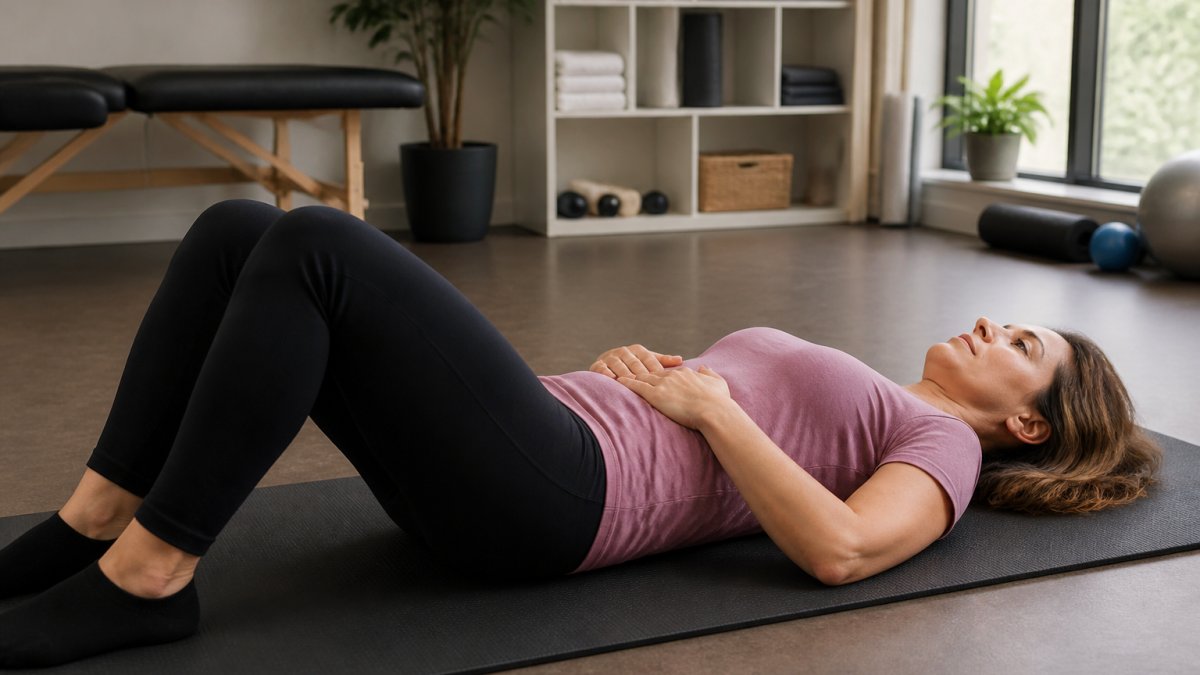
- Lie down with knees bent and feet flat.
- Exhale gently as you lift and squeeze the pelvic floor.
- Hold for 3 to 5 seconds while breathing normally.
- Release fully and rest for the same amount of time or longer.
- Repeat 8 to 10 times, then rest for a minute.
Positions, Holds, and Repetitions
Start lying down, where gravity helps. Progress to sitting, then standing, then during daily tasks. A review of pelvic floor training describes each exercise as a contraction followed by relaxation, using a 1:1 or 1:2 work-to-rest ratio so the muscle can recover (review of pelvic floor muscle exercise). Build hold times slowly. Add endurance holds before you add more reps.
A sample progression looks like this:
- Weeks 1-2: Lying down. 8-10 contractions, 3-second holds, 6-second rests, twice daily. Focus on a clean lift and full let-go, not on squeezing harder.
- Weeks 3-4: Add a 5-second hold and a 10-second rest. Keep 8-10 reps, twice daily. Begin one set sitting upright.
- Weeks 5-6: Move to 10-second holds with 10-second rests, 8-10 reps, twice daily. Add one set standing.
Common Technique Errors and How to Fix Them
Watch out: holding your breath or tightening your buttocks is the most common error. The Department of Veterans Affairs instructs patients to relax the muscles fully and avoid breath-holding or clenching the glutes (VA pelvic floor muscle training infographic). Fix it by pairing each squeeze with a slow exhale. If you cannot feel a clear lift, stop guessing and get hands-on guidance.
Three other errors show up often, and each has a simple cue:
- Bearing down instead of lifting. If you feel pressure or bulging rather than a lift, you are pushing, not contracting. Cue: imagine sipping through a straw with the pelvic floor, drawing up and in.
- Substituting the abs, glutes, or thighs. Place one hand on your lower belly and one on your buttock. Neither should tighten hard during the rep. If they do, reduce the effort and slow down.
- Squeezing and never releasing. A muscle that stays tight cannot contract well next time. Count the rest out loud so the relaxation is as long as the hold.
Here is the step-by-step sequence the article teaches for a correct Kegel contraction.
| Step | What to do | Time or frequency |
|---|---|---|
| 1 | Empty your bladder first | Before starting |
| 2 | Lie down with knees bent and feet flat | Starting position |
| 3 | Exhale gently as you lift and squeeze | During each rep |
| 4 | Hold while breathing normally | 3 to 5 seconds |
| 5 | Release fully and rest | Same time or longer |
| 6 | Repeat, then rest for a minute | 8 to 10 times |
Pelvic Floor Relaxation Exercises: The Step Most People Skip
Relaxation is half the training. A muscle that never lets go cannot contract well on demand.
Try a reverse Kegel: gently lengthen and release the pelvic floor as you inhale, without pushing hard. Follow with diaphragmatic breathing, letting the belly and ribs widen on the inhale. Because the core and pelvic floor work as a team, our core and abdominal rehabilitation explains how the abdominal wall fits into this picture.
How Often to Do Pelvic Floor Exercises for Steady Progress
How often to do pelvic floor exercises depends on your starting strength, but consistency beats intensity. One study looked at six weeks of pelvic floor muscle training in men, which gives a sense of a reasonable early checkpoint (six-week pelvic floor training study). If you are in perimenopause or menopause, hormonal changes affect tissue tone, and our menopause and healthy aging physical therapy covers how to adjust a routine as your body changes.
A Measurable Weekly Schedule
Rather than squeezing in reps whenever you remember, anchor sets to times of day you already repeat. A workable pattern:
- Morning: one set of slow holds lying down, before you get out of bed.
- Midday: one set sitting at your desk or in the car (pulled over and parked).
- Evening: one set standing at the kitchen counter, plus the quick-contraction set once you reach weeks 7-8.
Keep a simple log with four columns: date, position, hold time, and reps completed. Two weeks of entries will show whether you are actually progressing or just repeating the same set.
What to Expect and When
Early changes in control and coordination can appear within a few weeks, while measurable strength and leak reduction often take longer and vary by starting point. Set checkpoints instead of deadlines:
- Week 2: You can feel a clear lift and a full release without clenching the glutes.
- Week 6: You can hold 10 seconds with a 10-second rest for 8-10 reps in two positions.
- Week 12: You notice fewer leaks with coughs, sneezes, or lifts, or you can complete the standing set with control.
If you miss a checkpoint, that is information, not failure. It usually means the hold is too long, the rest is too short, or the muscles need an assessment before more load.
Signs You Are Overdoing It
More is not better. Back off if you notice increased heaviness, aching, or leaking after a session, or if you cannot fully relax between reps. Those patterns suggest the floor is fatigued or overactive, and the fix is usually shorter holds, longer rests, and a technique review rather than extra sets.
When to Book a Pelvic Floor Assessment at Zona
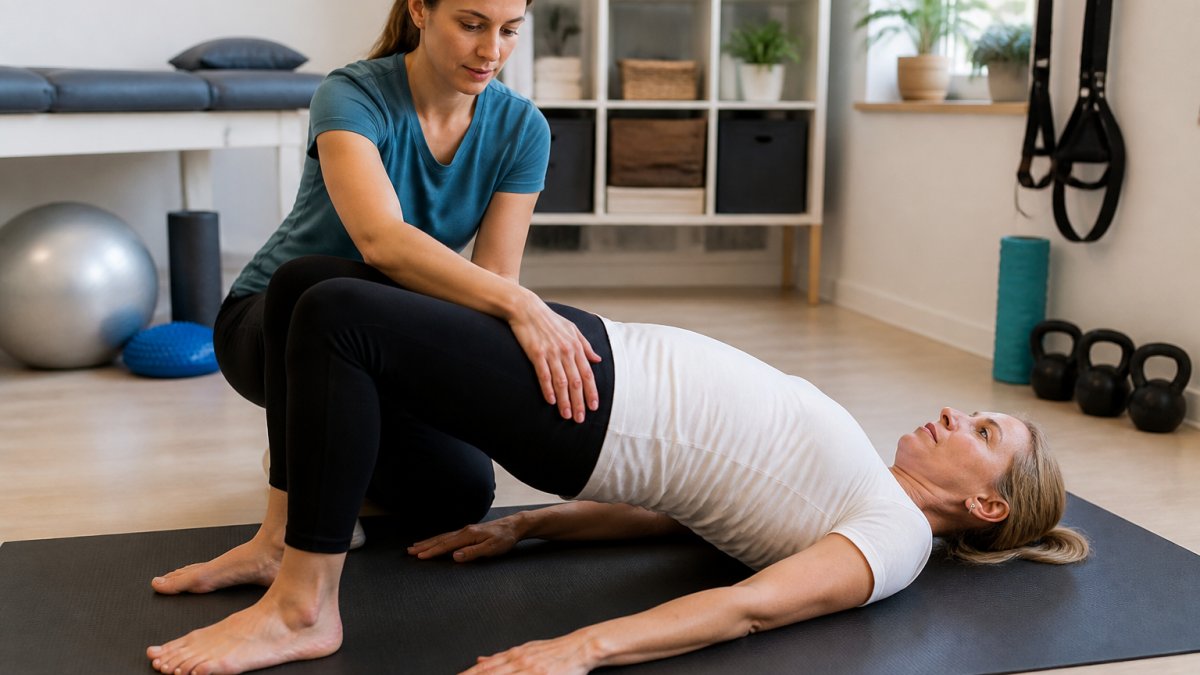
Consider an assessment when symptoms persist despite weeks of practice, when you cannot tell weakness from tightness, or when leaking, pain, or urgency limit your day. A one-on-one evaluation can check technique, coordination, and strength to help guide a personalized plan. You can learn about pelvic floor physical therapy and what a visit involves before you commit.
Frequently Asked Questions
What exercises help with pelvic floor muscle weakness?
Guided contractions, often called Kegels, are the foundation. A systematic review from 2023 reported effectiveness rates of 29% to 59% for training regimens that strengthen pelvic-floor muscles, though the review does not specify the outcome measure behind that range. A complete program pairs contractions with relaxation work, diaphragmatic breathing, and functional positions like sitting and standing. A physical therapist can check whether your technique is correct and adjust the plan as your strength improves.
How long does it take for pelvic floor exercises to work?
One study examined six weeks of pelvic floor muscle training in men, though the available summary does not report its results. Changes often come gradually rather than overnight, and progress depends on starting strength, technique, and consistency. Keeping a simple log of leakage episodes or holding time helps you see change that is easy to miss day to day. If nothing shifts after several weeks of correct practice, an assessment can identify whether technique or an overactive floor is holding you back.
Can pelvic floor muscles be weak and too tight at the same time?
Yes. A hypertonic pelvic floor can feel weak because tight muscles do not coordinate well, but adding more strengthening may worsen symptoms. Harvard Health notes that for a hypertonic pelvic floor, stretches for tight hips or lower backs and exercises such as yoga may help relax the muscles. This is why a proper assessment matters before you commit to a Kegel routine, since the right exercises for pelvic floor weakness depend on which pattern you have.
Are Kegels enough to strengthen the pelvic floor?
Kegels alone may not be enough for every person. The VA's pelvic floor muscle training infographic stresses letting go and relaxing the muscles, and avoiding breath-holding or tightening the buttocks. A review from 2021 describes each exercise as a contraction followed by relaxation, using a 1:1 or 1:2 contraction-to-relaxation ratio so muscles recover between reps. Pairing correct Kegels with relaxation exercises, breathing coordination, and daily practice gives you a more complete routine than contractions alone.
Pelvic floor weakness rarely resolves with guesswork. A structured plan, checked by a clinician, gives you a clear path forward. At Zona Physical Therapy & Wellness, our one-on-one sessions last 45 to 60 minutes, and our team includes physical therapists with specialized women's health and pelvic floor training. Get started with Zona Physical Therapy & Wellness and build a routine that actually fits your body.
