Dry Needling for Back Pain
How dry needling may fit into care for muscle-related low back pain, guarding, and tightness around the hips.
Learn More about Dry Needling for Back PainPhysical therapist-owned practice serving Buford & North Gwinnett
4305 South Lee Street, Suite 300, Buford, GA
Physical Therapy · Dry Needling
Relieve Muscle Tension. Move With Less Pain.
Dry needling, used as one part of an individualized physical therapy plan, to help address muscle-related pain and movement limitations — always after a thorough evaluation.
Placeholder: online booking link pending. Call 678-765-0909 to schedule.
Questions first? Call 678-765-0909
How It Works
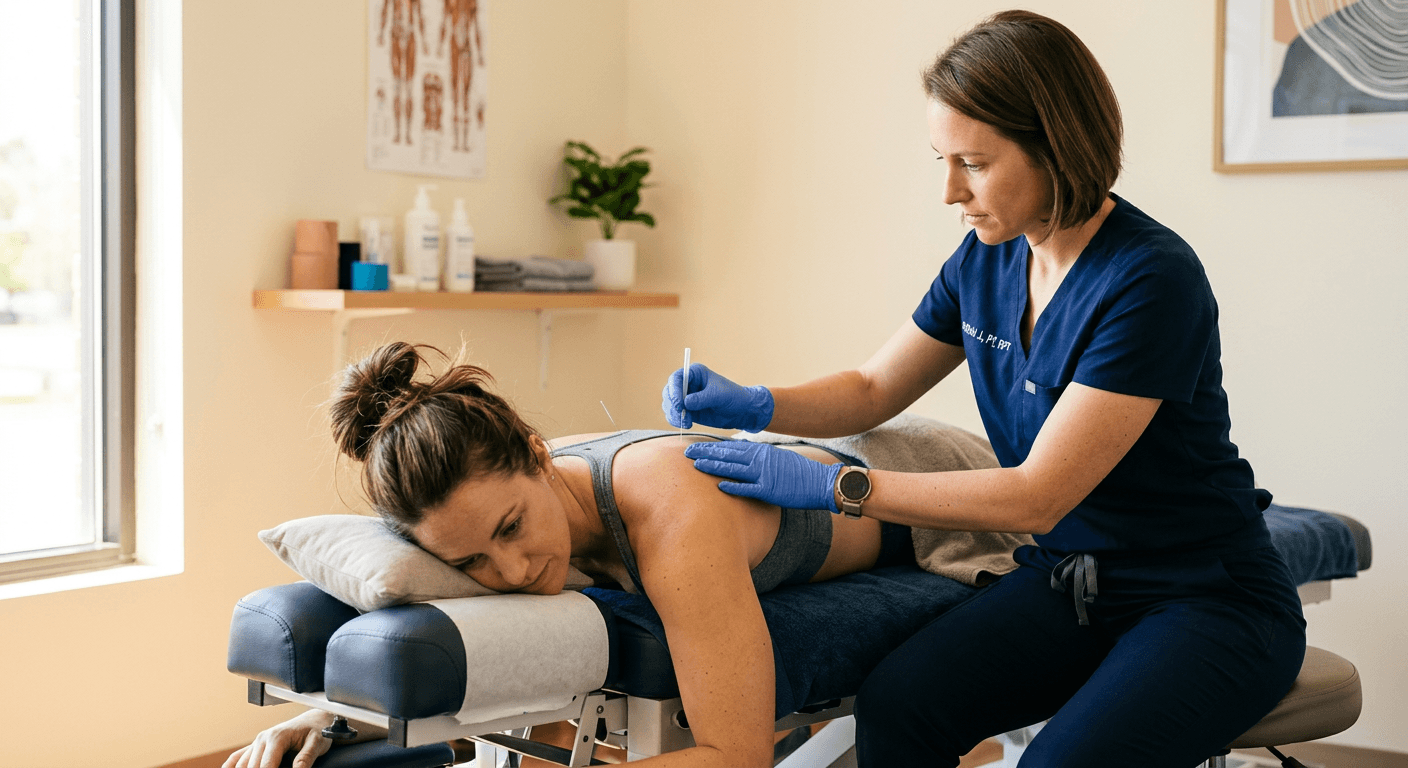
Dry needling uses a thin, solid, sterile needle placed into specific muscles or tissues identified during your evaluation. It is often directed at trigger points — tender, tight areas in muscle that can cause local pain or refer discomfort to other areas.
The goal is to help reduce muscle-related pain and tension so you can move, exercise, and return to daily activities more comfortably. At Zona, dry needling is never a stand-alone treatment. It is one tool within a physical therapy plan that also includes exercise, movement retraining, and education — and it is only used when your physical therapist feels it is appropriate for you.
Common Concerns
Dry needling may be one option for muscle-related pain in these areas. Whether it fits your situation is determined during your evaluation.
Is It Right for You?
Your physical therapist will help you decide. Dry needling is always optional, and other approaches are available.
These may mean dry needling needs to be modified or avoided.
What to Expect
Each step is explained before it happens, and you are welcome to ask questions at any point.
A brief call to discuss your concerns, insurance benefits, and scheduling, and to answer your initial questions.
Your physical therapist reviews your history and examines how you move to understand what is contributing to your pain.
If dry needling may be appropriate, your therapist explains the benefits, risks, and alternatives. You decide whether to proceed.
A sterile, single-use needle is placed into the targeted muscle. You may feel a brief ache, cramp, or twitch. Needles are removed and safely disposed of.
Most visits continue with exercise, hands-on care, or movement retraining, plus guidance for your home program.
Safety & Aftercare
Sterile, single-use needles are used for every treatment and disposed of immediately after use.
Rare but serious risks include infection, nerve irritation, and — when treating near the chest wall or upper back — a collapsed lung (pneumothorax). Your therapist will explain these and the precautions taken before you decide.
Learn More
Learn how dry needling may fit into care for specific areas, and how it compares with acupuncture.
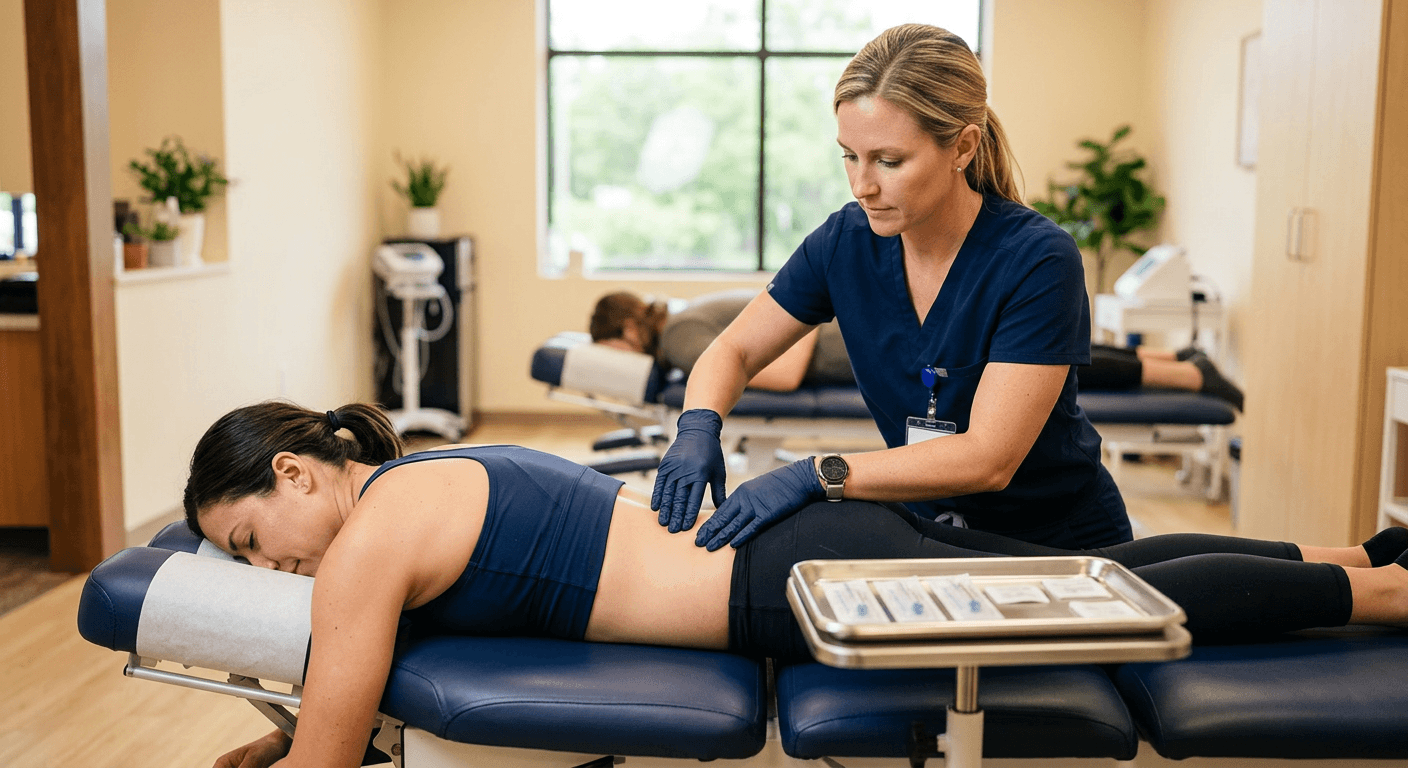
How dry needling may fit into care for muscle-related low back pain, guarding, and tightness around the hips.
Learn More about Dry Needling for Back Pain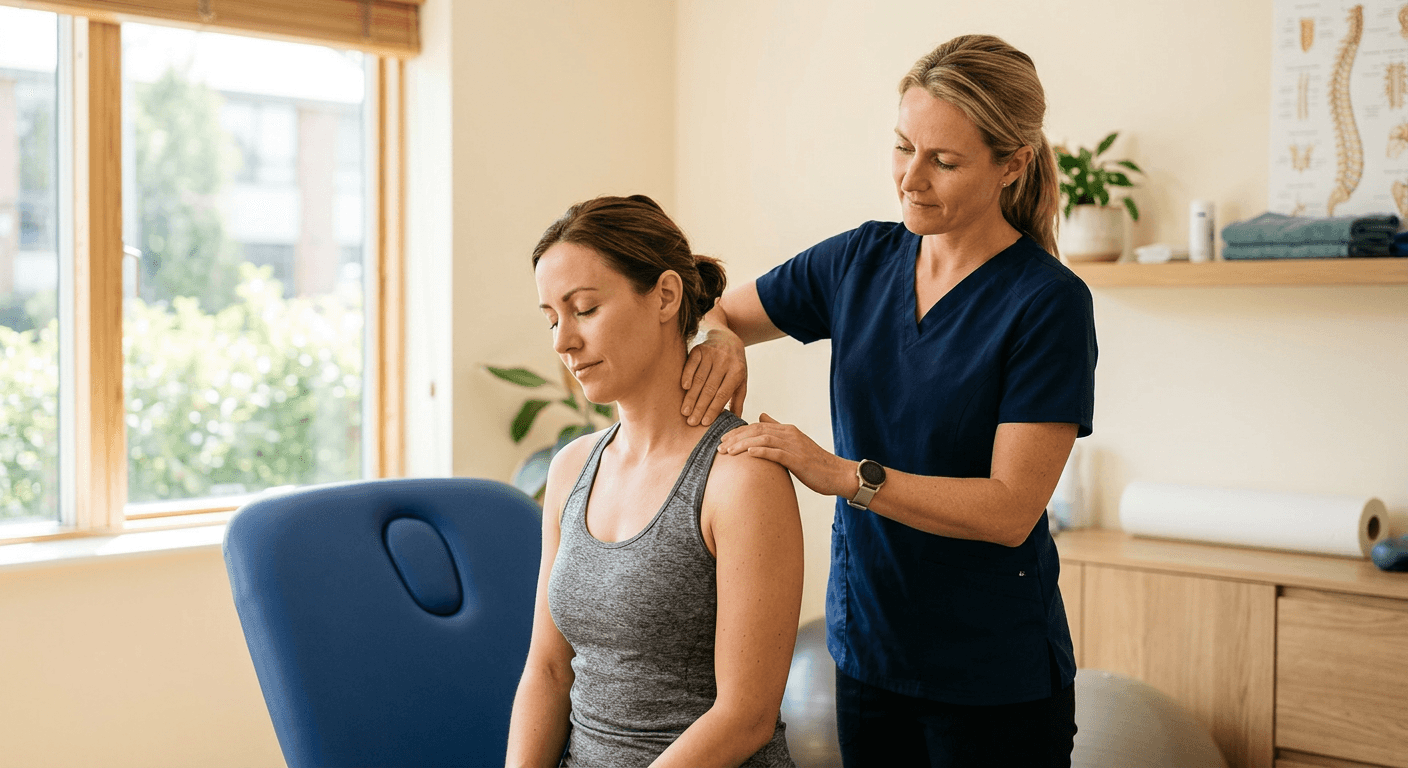
How dry needling may help with upper-shoulder and neck muscle tension linked to desk work, posture, and stress.
Learn More about Dry Needling for Neck Pain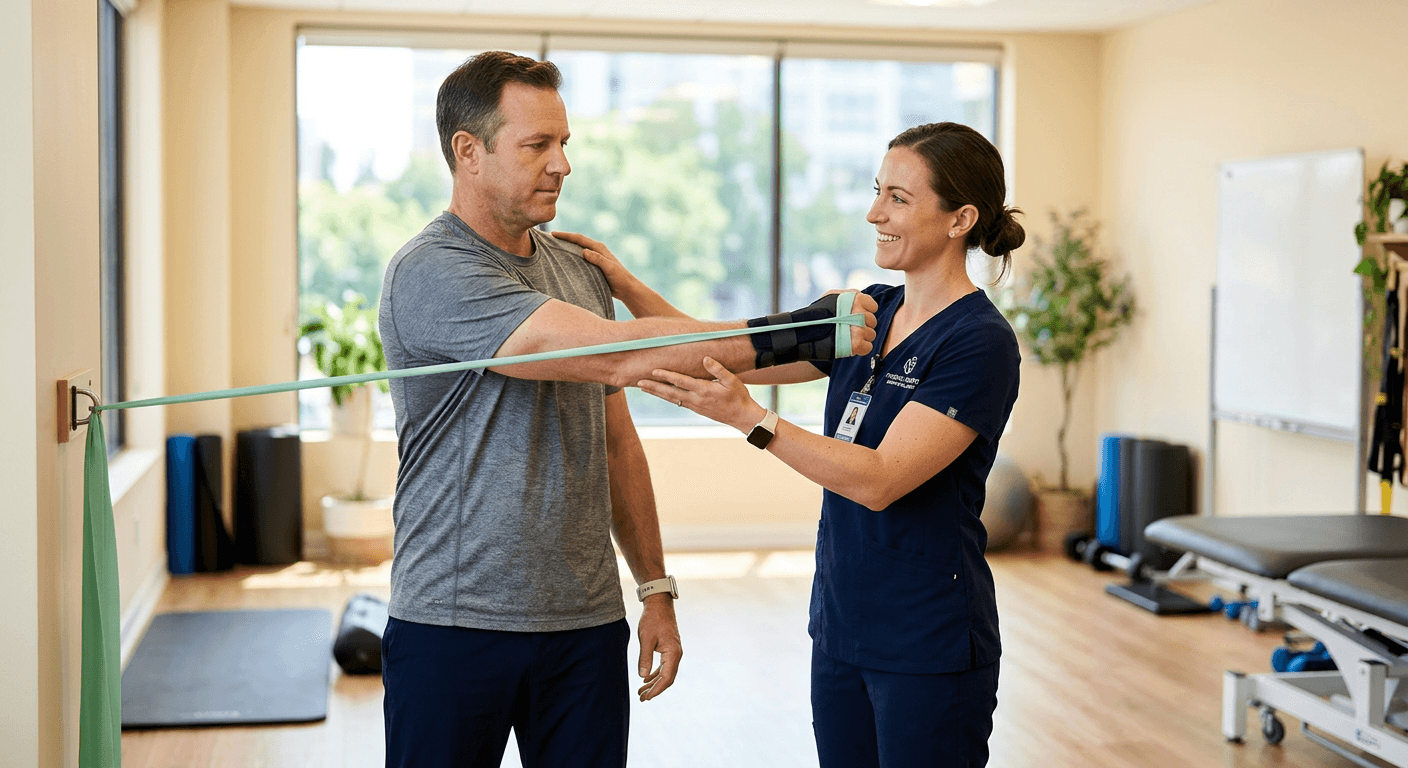
How dry needling may support shoulder rehab when sensitive muscles around the shoulder blade and rotator cuff limit movement.
Learn More about Dry Needling for Shoulder Pain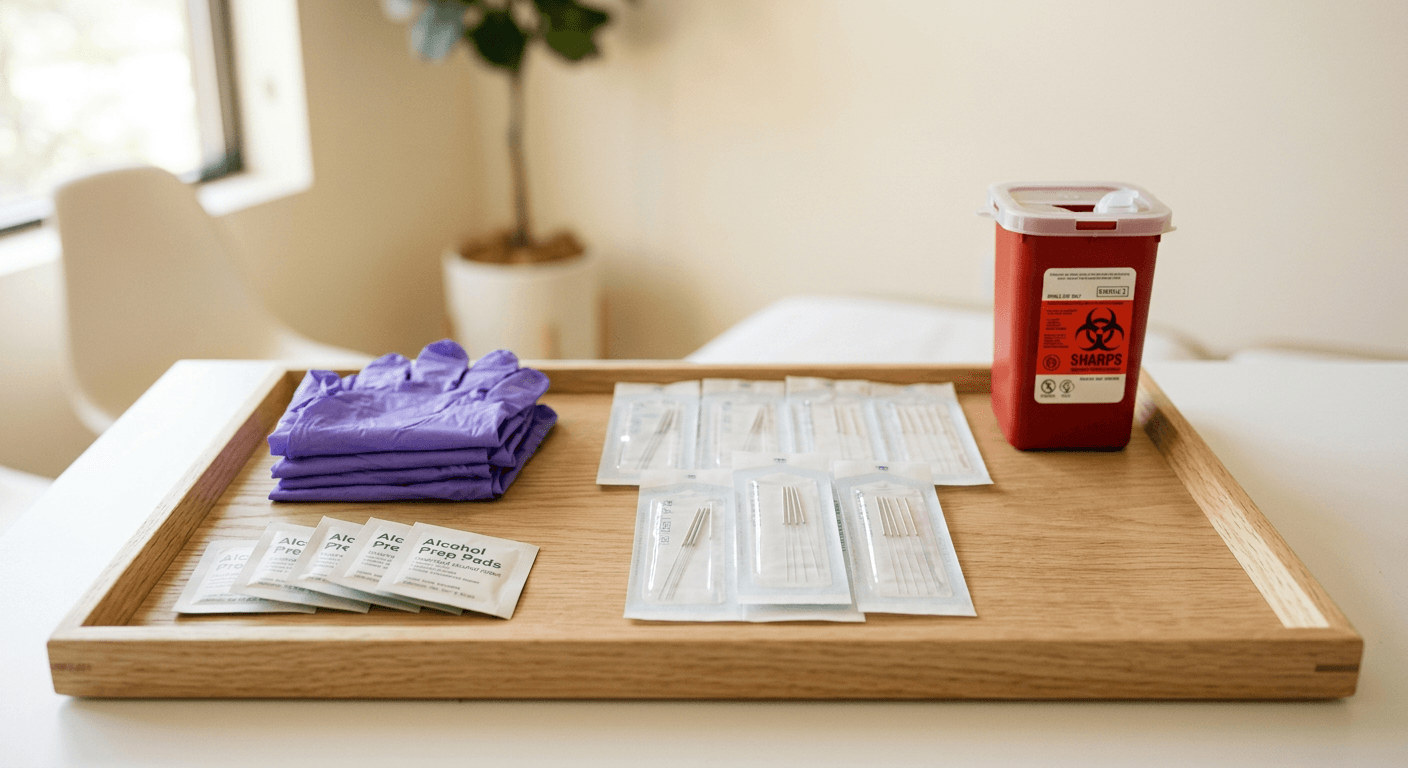
A neutral, side-by-side look at how dry needling and acupuncture differ in background, purpose, and who provides them.
Learn More about Dry Needling vs. AcupunctureWhy Zona
Your physical therapist works with you for the entire visit.
Time for a thorough assessment, treatment, and exercise in the same visit.
Dry needling is only recommended after an evaluation shows it may be appropriate.
Care guided by honesty, integrity, and compassion.
FAQs
Still have questions? Call 678-765-0909. You can also explore Orthopedic Physical Therapy or Conditions We Treat.
Dry needling is a technique in which a trained clinician inserts a thin, solid, sterile needle into specific muscles or tissues to address muscle-related pain and movement limitations. Nothing is injected, which is why it is called “dry.”
Most people feel little from the needle going in. When it reaches a sensitive muscle, you may feel a deep ache, a brief cramp, or a twitch. Your therapist checks in throughout, and you can ask to stop at any time.
When performed by a trained clinician using sterile, single-use needles and appropriate technique, it is generally considered safe. Like any procedure it has risks, which your therapist reviews with you before treatment.
It varies. Some people receive dry needling at a few visits, others more often, and some not at all. Your therapist adjusts the plan based on how you respond.
Coverage for dry needling varies by plan, and some plans do not cover it. During your phone consultation, our team can help you understand your benefits and any self-pay options. Call 678-765-0909 with questions.
No. Both use thin filament needles, but they come from different traditions and frameworks and are provided by different clinicians.
Start with a brief phone consultation. Patients visit our Buford clinic from Sugar Hill, Suwanee, Flowery Branch, Dacula, Braselton, and Lawrenceville.
Placeholder: online booking link pending. Call 678-765-0909 to schedule.