
Last Updated: November 5, 2026
Quick Summary
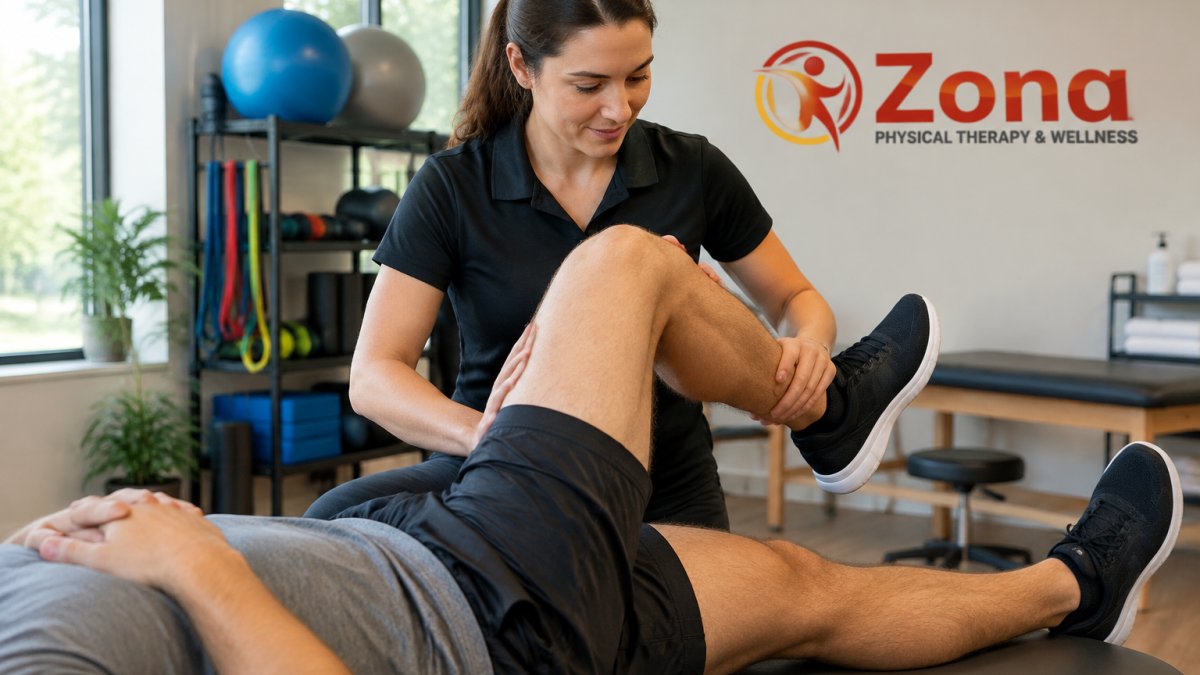
Personalized physical therapy for athletes builds the plan around your injury, your sport, and your position instead of a printed handout. Your therapist compares your injured side to your healthy side and adjusts exercises, load, and timeline to match what your body actually does.
- A thorough athlete assessment considers injury history, range of motion, strength, balance, movement mechanics, training load, and goals.
- A common benchmark is injured-side strength within roughly 90% of the uninjured side, depending on joint and sport.
- Clearing an athlete on pain-free movement alone is the most common way reinjury happens.
- At Zona Physical Therapy & Wellness, sessions last 45 to 60 minutes.
- A 2026 provider article estimates $100 to $250 per sports physical therapy session without insurance.
Table of Contents
- Why Personalized Physical Therapy for Athletes Beats a Generic Plan
- Sports injury rehabilitation built around your sport and position
- Return to sport physical therapy: how readiness is measured
- One-on-One Physical Therapy and What a Session Looks Like
- Sports Performance Training That Carries Over to Competition
- Costs, Insurance and How Many Visits to Expect
- Frequently Asked Questions
Why Personalized Physical Therapy for Athletes Beats a Generic Plan
The U.S. physical therapy services market reached $52.3 billion in 2025, according to Grand View Research's market size report, and it keeps growing because more people want care built around their own body and goals. A plan made for one athlete rarely fits another. Personalized physical therapy for athletes starts with your injury, your sport, and your position, not a printed handout. You can see our sports injury physical therapy in Buford, GA and book an evaluation.
Generic plans treat every shoulder the same. That misses the way a swimmer's shoulder works compared with a pitcher's. Personalized physical therapy for athletes changes the exercises, the load, and the timeline to match what your body actually does.
What an Athlete Assessment Actually Measures
An athlete assessment is a full picture of how you move, not just where it hurts. A thorough assessment considers injury history, range of motion, strength, balance, and movement mechanics, along with training load and goals.
That first visit sets the tone. Your physical therapist compares your injured side to your healthy side and notes the gaps. Those gaps guide the whole rehabilitation program.
Sports injury rehabilitation built around your sport and position
A sport-specific plan starts with the demands of your sport. A soccer player needs cutting and sprinting control. A volleyball player needs overhead reach and landing strength.
Sport-specific exercises should match the demands of your position. If knee pain is limiting your training, our physical therapy for knee pain in Buford, GA can help you get back to running and cutting safely.
Common Injuries and How Treatment Differs
The same injury can need different care by sport. Here is how treatment shifts:
| Injury | Common in | Treatment focus |
|---|---|---|
| Rotator cuff irritation | Overhead sports | Shoulder control, soft tissue treatment |
| ACL strain | Cutting and pivoting sports | Strength symmetry, landing mechanics |
| Ankle sprain | Court and field sports | Balance, coordination, return-to-sport testing |
| Hamstring strain | Sprinting sports | Strength training, treatment progression |
Shoulder problems from overhead motion get their own plan. Our physical therapy for shoulder pain in Buford, GA focuses on reaching, lifting, and sleeping comfortably again.
Return to sport physical therapy: how readiness is measured
Return to sport physical therapy is generally guided by objective testing rather than pain alone, since pain is a symptom rather than a clearance signal.
The test battery we use before clearing an athlete
A return-to-sport evaluation is generally a sequence of measurements rather than a single pass/fail test.
- Strength symmetry. We measure peak force or torque on both sides for the muscle groups that drive your sport, quadriceps and hamstrings for runners and field athletes, shoulder rotators and scapular stabilizers for overhead athletes, calf and hip musculature for court athletes. A common benchmark is injured-side strength within roughly 90% of the uninjured side, though the exact target depends on the joint and the sport.
- Range of motion. We compare goniometric or inclinometer measurements side to side. Residual deficits in knee extension, ankle dorsiflexion, or shoulder external rotation are common reasons to delay clearance even when strength looks good.
- Functional and hop testing. Single-leg hop for distance, triple hop, crossover hop, and a timed 6-meter hop test let us compare limb symmetry under load. A limb symmetry index, injured leg divided by healthy leg, multiplied by 100, is the standard way to express the result.
- Balance and neuromuscular control. Single-leg balance with eyes open and closed, the Y-balance reach test, and landing-error scoring on a drop jump reveal control problems that strength testing alone misses.
How the numbers drive the plan
Watch out: clearing an athlete on pain-free movement alone is the most common way reinjury happens, a limb that feels fine but is still 15% weaker than the other side is not ready for full competition load.
What return to play actually looks like
Clearance is usually staged rather than granted all at once: full practice without limitation, then limited competition minutes, then full competition, with re-testing between stages. A study indexed by PubMed Central on athlete beliefs about physical therapy found that players hold beliefs about therapy that clinicians can address, which is why we walk through the test results with you rather than handing over a pass/fail verdict.
When testing says wait
Sometimes the honest answer is that you are not ready, and the plan needs more time in a specific phase. That is not a setback, it is the test doing its job. We would rather adjust the timeline in the clinic than manage a reinjury on the field.
One-on-One Physical Therapy and What a Session Looks Like
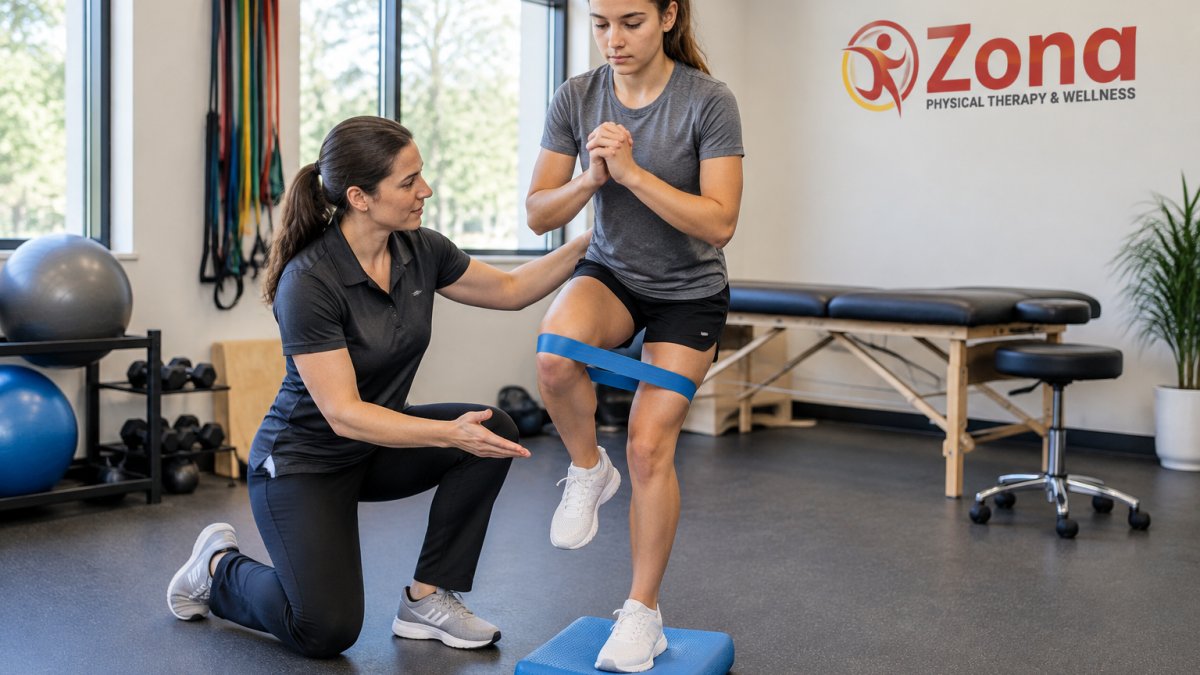
One-on-one physical therapy means your therapist works with you for the whole visit, not several patients at once. At Zona Physical Therapy & Wellness, sessions last 45 to 60 minutes.
A practical guide to getting started
Most athletes arrive without knowing what to ask or bring. Here is the sequence that makes the first few weeks smoother.
- Choose the right provider. Look for a licensed physical therapist with experience treating your sport, not just your joint. Ask whether evaluations are one-on-one, how long sessions run, and whether the clinic does objective re-testing. Check with your insurer about whether a referral is required for reimbursement.
- Prepare for the evaluation. Bring a list of prior injuries and surgeries, your current training schedule and weekly volume, the shoes and equipment you use, and any imaging reports you already have. Write down your specific goal, a return date, a tryout, a race, because the plan is built backward from it.
- Expect a full first visit. Ask at your first visit what the evaluation will include and what you will leave with.
- Progress in phases. Care usually moves from pain control and restoring motion, to rebuilding strength, to sport-specific loading and return-to-sport testing. Re-testing every few weeks tells you which phase you are in.
What a typical session includes
A session follows a clear order:
- A quick check of how you feel and what changed since the last visit
- Warm-up and mobility work
- Strength and conditioning sets matched to your plan
- Hands-on treatment for tight or sore tissue
- A short review of what to do before the next visit
Making a hybrid plan work
Not every visit needs to be in person. A common pattern is to use in-clinic visits for hands-on treatment, load progression, and objective testing, and to use a home program or telehealth check-ins for the weeks in between. If you want to see what a private visit involves, you can book a private appointment and ask questions before you commit.
Sports Performance Training That Carries Over to Competition
Progress gets tracked with real measures. We recheck range of motion, strength, and functional capacity every few weeks. That is how we adjust the plan and keep injury prevention in view.
Costs, Insurance and How Many Visits to Expect
Cost and visit count depend on your injury, your insurance, and your goals. A 2026 provider article estimates $100 to $250 per sports physical therapy session without insurance (The Summit Physical Therapy cost estimate).
Recovery timelines vary by injury and how consistently you follow your plan. For a clear picture of what to expect, read our guide on how long physical therapy takes.
Frequently Asked Questions
How is sports physical therapy different from regular physical therapy?
Regular physical therapy often aims at getting you through daily activities without pain. Sports physical therapy adds the demands of your sport: cutting, jumping, throwing, sprinting or changing direction at speed. That means the assessment looks at movement mechanics, strength symmetry and functional capacity specific to your position, and the rehabilitation program includes sport-specific exercises. Personalized physical therapy for athletes also builds in return-to-sport testing, so the decision to compete again rests on measured criteria rather than how you feel on a given day.
How long does physical therapy take for a sports injury?
Recovery timelines vary widely by injury, tissue involved and how consistently you attend sessions. A mild ankle sprain may resolve in a few weeks, while post-surgical shoulder or knee rehabilitation can run several months. Your physical therapist should map out a treatment progression with checkpoints, then adjust it as your functional capacity changes. Ask at the first visit for an estimated number of visits and the milestones that would shorten or extend it, so you can plan around training and work.
Does insurance cover sports physical therapy?
Many health plans cover physical therapy when it is medically necessary, but coverage, visit limits and copays depend on your specific plan. Call your insurer before the first appointment and ask about physical therapy benefits, whether a referral or prior authorization is required, and your in-network cost per visit. For athletes paying without insurance, confirm current pricing directly with the practice.
How do physical therapists help athletes return to sport safely?
Return to sport physical therapy generally relies on objective testing rather than guesswork. Ask your physical therapist which measures they use to decide when you are ready. This staged approach lowers reinjury risk and gives you a clear, defensible answer to the question of whether you are ready to compete.
An athlete's comeback asks for more than a generic plan. Personalized physical therapy for athletes at Zona Physical Therapy & Wellness pairs one-on-one care with sport-specific testing, 45 to 60 minute sessions, and modern equipment so you can return with confidence. Get started with Zona Physical Therapy & Wellness and train toward a stronger, safer return to play.
