
Last Updated: November 17, 2026
Quick Summary
Postpartum pelvic pain is pain in the pelvis, lower back, hips, or tailbone that begins or continues after childbirth, and physical therapy treats it by assessing and retraining the muscles, joints, and movement patterns involved. Care includes an evaluation, pelvic floor contraction and relaxation training, and a goal-based exercise plan. Early assessment simplifies recovery, so don't wait months for pain to resolve on its own.
- A 2026 study of 37,329 individuals found only 3.9% were referred to pelvic floor physical therapy after birth.
- Your evaluation includes a posture and movement screen plus an external and, with consent, internal pelvic muscle assessment graded 0 to 5.
- Kegels are not right for everyone; some people need strengthening while others need relaxation and coordination work.
- Pelvic pain after a C-section care focuses on scar mobility, breathing, and graded core stabilization.
- Seek prompt medical attention for heavy bleeding, fever, worsening swelling, or pain that suddenly intensifies.
Table of Contents
- Why Postpartum Pelvic Pain Happens and How Physical Therapy Helps
- Pelvic Floor Exercises for Postpartum Recovery and What to Expect at Your Evaluation
- How Long Does Postpartum Pelvic Pain Last and Pelvic Pain After Pregnancy C-Section
- Frequently Asked Questions
Why Postpartum Pelvic Pain Happens and How Physical Therapy Helps
Postpartum pelvic pain is pain in the pelvis, lower back, hips, or tailbone that begins or continues after childbirth, and physical therapy for postpartum pelvic pain addresses it by assessing and retraining the muscles, joints, and movement patterns involved. At Zona Physical Therapy & Wellness, we see this often: the pain is real, and it can respond well to guided care. A 2026 study indexed in PubMed's postpartum pelvic floor physical therapy referral study found that among 37,329 individuals, only 3.9% were referred to pelvic floor physical therapy after birth. (Source: American College of Obstetricians and Gynecologists)
Pregnancy and delivery load the pelvic floor, sacroiliac joint, and pubic symphysis, and the abdominal wall may separate at the midline (diastasis recti), causing pelvic girdle pain, pain with intercourse (dyspareunia), incontinence, or a heavy feeling suggesting prolapse. Physical therapy restores pelvic muscle strength, breathing coordination, and core stabilization through assessment, contraction and relaxation training, and a goal-based exercise plan. You can explore pregnancy and postpartum physical therapy in Buford to see how one-on-one pelvic floor and core care works and to book an appointment.
Watch out: waiting months for pain to resolve on its own is a common mistake; early assessment simplifies recovery.
Pelvic Floor Exercises for Postpartum Recovery and What to Expect at Your Evaluation
Pelvic floor exercises for postpartum recovery are targeted contractions and relaxations of the muscles supporting the bladder, bowel, and uterus, and work best when a therapist confirms correct contraction. Kegels are best known, but some people need strengthening while others need relaxation and coordination work. Because the right balance of strengthening, relaxation, and coordination depends on your symptoms, postpartum physical therapy can help clarify what care may be worth pursuing.
What to expect at your evaluation:
- A conversation about your delivery, symptoms, and goals
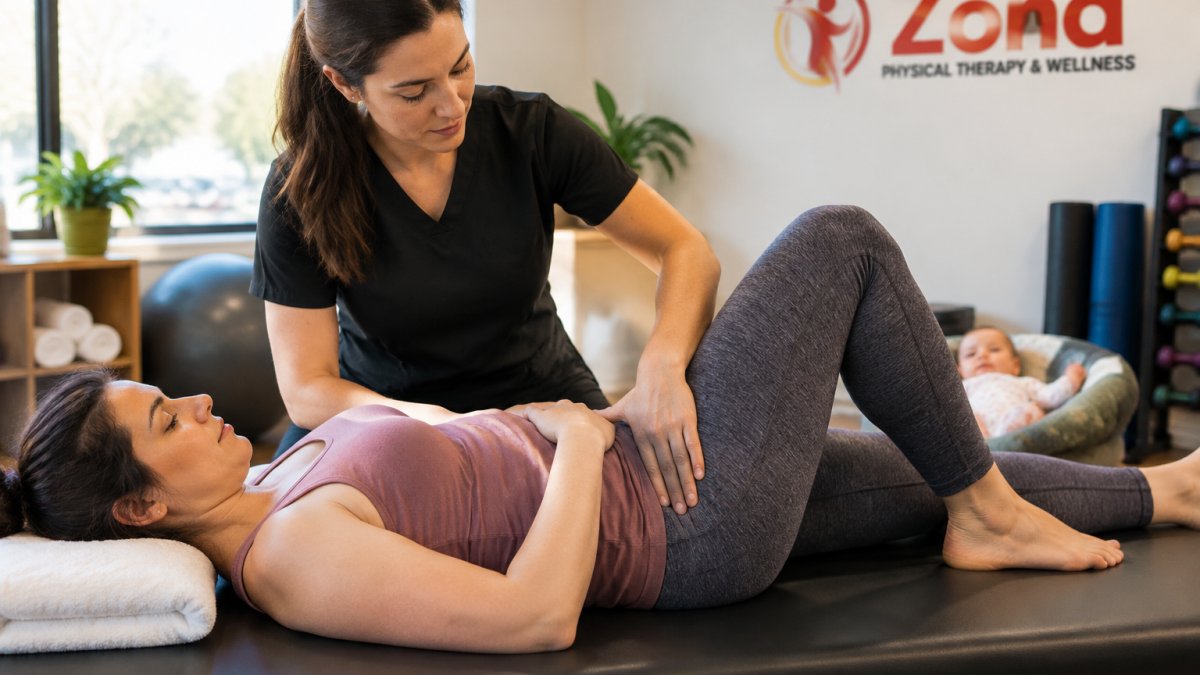
- A posture and functional movement screen, including the transverse abdominis and breathing coordination
- An external and, with your consent, internal assessment of pelvic muscle strength, graded 0 to 5
- A written plan covering therapeutic exercise, manual therapy if appropriate, and a home program
A 2024 systematic review in PubMed Central's postpartum rehabilitation review suggested five sessions of transvaginal electrical stimulation may improve muscle strength in postpartum women with severely weakened muscles, though it did not establish that this approach suits everyone. That is why an individualized plan matters.

If you are ready to start, explore pelvic floor physical therapy in Buford or read our guide on how to find a pelvic floor physical therapist. For weakness specifically, see which exercises actually fix pelvic floor weakness.
Here is what the evaluation involves, step by step.
| Step | What to expect |
|---|---|
| 1 | Conversation about delivery, symptoms, and goals |
| 2 | Posture and functional movement screen, including breathing coordination |
| 3 | External and, with consent, internal pelvic muscle assessment, graded 0 to 5 |
| 4 | Written plan with therapeutic exercise, manual therapy, and home program |
How Long Does Postpartum Pelvic Pain Last and Pelvic Pain After Pregnancy C-Section
Pain that persists for several months after birth deserves assessment. Pelvic pain after a C-section has its own pattern: scar tissue, abdominal weakness, and altered core control can cause pain at the incision, lower back, or with movement, so post-cesarean care focuses on scar mobility, breathing, and graded core stabilization.
Persistent pain affects sleep, mood, and confidence in caring for a newborn; partners can help with positioning, gentle log-rolls out of bed, and encouragement to keep appointments. If back pain lingers, our article on back pain after pregnancy exercises that actually help covers movements to start with.
When to seek prompt medical attention: heavy bleeding, fever, worsening swelling, or pain that suddenly intensifies, these need a physician, not a therapy appointment.
Pelvic pain after childbirth is common, but it is not something you have to manage alone. Zona Physical Therapy & Wellness offers one-on-one pelvic floor physical therapy, individualized treatment plans, and 45- to 60-minute sessions with a therapist who listens. Call 678-765-0909 to book an evaluation and start a recovery plan built around your body.
Frequently Asked Questions
What are the common symptoms of postpartum pelvic floor dysfunction?
Symptoms can include leaking urine when you cough or laugh, a heavy or dragging feeling in the pelvis, pain during sex, and discomfort in the lower back or tailbone. Some women notice a gap in the abdominal muscles, known as diastasis recti, or feel unsure how to contract and relax the pelvic floor muscles. A proper musculoskeletal assessment can help identify the cause and a suitable plan.
When is the right time to start physical therapy for postpartum pelvic pain?
The right timing depends on your delivery type, healing, and symptoms. If you have pain, leaking, or a feeling of heaviness, ask your provider about a referral or contact Zona Physical Therapy & Wellness at 678-765-0909 to discuss whether an evaluation is right for you.
Can physical therapy help with pelvic pain after a C-section?
Yes. Pelvic pain after pregnancy C-section can involve scar tissue restrictions, core weakness, and changes in posture and breathing coordination. A physical therapist can assess your abdominal wall, pelvic floor tone, and functional movement to determine an individualized plan.
